

The Blog
from Retreat Yourself
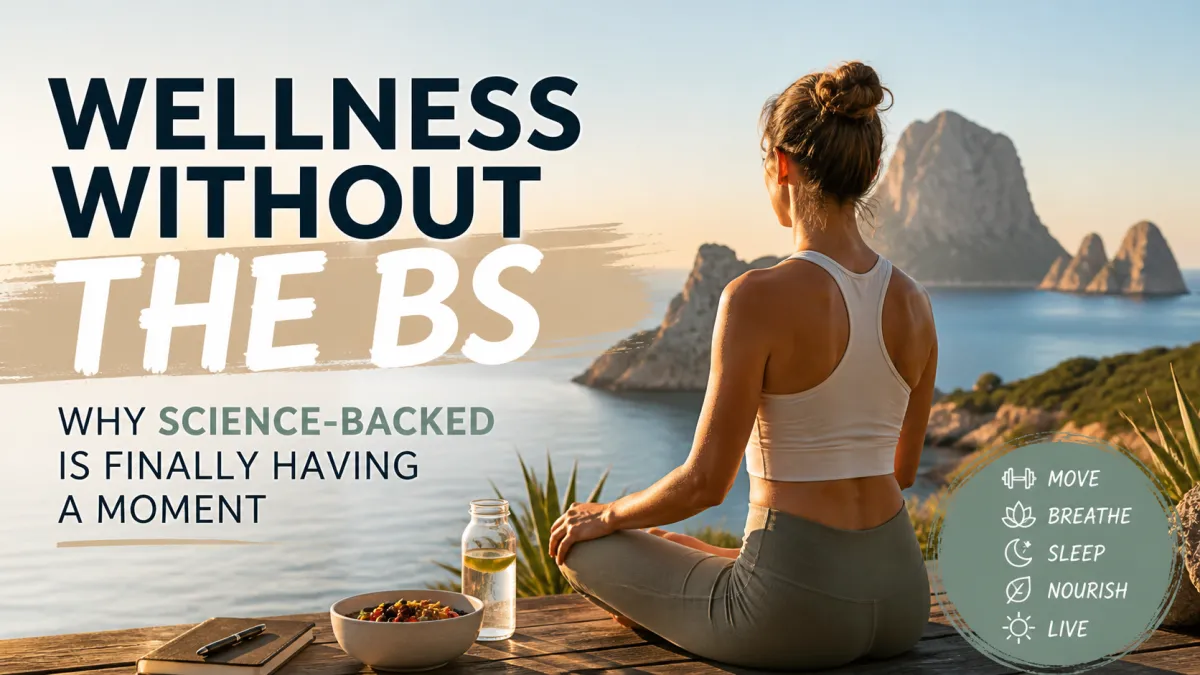
Wellness without the Bullsh*t
There was a time when “wellness” meant lighting a candle, drinking something green, and hoping for the best.
I remember about 15 years ago working in the fitness industry and actively avoiding the word wellness altogether. It just felt… a bit too “woo woo”. Fitness felt safer. More credible. Less likely to involve someone trying to sell you a crystal for your liver.
Now?
I’ve completely flipped. I lean far more into wellness (bar the crystals) and if anything, I’m slightly wary of the fitness space thanks to social media. Funny how that’s worked out.But one thing has definitely changed for the better. I’m noticing that people are starting to ask a much more direct question when it comes to anything labelled “wellness”:
“Is this actually doing anything?”
And honestly… it’s about time. I get people telling me all the time about the supplements they’re taking for women’s health. Sometimes I’ll ask, “is it actually working?” and it becomes clear they’re not entirely sure what it’s meant to be doing in the first place… never mind whether it’s doing it.
To be fair, I’m not above it either. There are definitely things I’ve done in the name of wellness where I think, this seems like a good idea… and just leave it there rather than digging any deeper.
For years, the wellness space has been a bit of a mixed bag. Some genuinely useful practices…...Mixed in with things that sound convincing, look great on Instagram, but don’t really stand up to much scrutiny when you dig beneath the surface……(detox teas). And I’m very much someone who likes to dig beneath the surface when I’m parting with my cash. Thankfully, more people are starting to question things too.
We’ve moved into a phase where:
“Because Kylie Jenner said” isn’t enough
“It worked for my friend” isn’t quite cutting it
and “it’s got 20 million views on Instagram ” is… questionable at best
There’s a clear shift towards understanding how and why something works. Not in a dry, overly clinical way, just enough to feel confident you’re not wasting your time (or money).
So what does “science-backed wellness” actually mean?
It’s not about turning your retreat into a full science experiment - although I’ll be honest, offer me a few blood tests, scans and a detailed health report after a few days chilling in Costa Rica and I’d be sold. It’s about choosing practices that have a clear physiological or psychological benefit backed by evidence, not just opinion.
Things like:
Strength training → improving bone density, muscle mass, metabolic health
Breathwork → influencing the nervous system, stress response, heart rate variability
Sleep optimisation → improving recovery, not just hours in bed
Nutrition → fuelling properly instead of following whatever TikTok’s decided is toxic this week
Cold and heat exposure → supporting circulation, recovery, resilience
None of this is new.
What’s changed is that people now want to know why they’re doing it not just because one of the Kardashians said it worked for them, which somehow became enough for a while. Where retreats come into this, this is where things start to shift.
Because people are a lot more switched on now. They’re still open to trying new things, still want the experience, but they also want to feel like there’s some substance behind it.
Which means the retreats that are doing well aren’t just selling:
“relaxation” or “escape”
They’re offering something that actually makes a difference. Not in a dramatic, “new you in 5 days” way. But in a more realistic, noticeable way. Marginal gains that actually add up.
Things like:
feeling better in your body
understanding how to manage stress properly
learning strategies you can actually use at home
building habits that last longer than the flight back
It’s a shift from:
“That was nice” to “That actually made a difference.”
The sweet spot (and where people get it wrong) This is where a lot of brands miss it. People don’t want some influencer they can’t relate to spouting advice that, let’s be honest, is often backed more by a brand deal than actual evidence. And they definitely don’t want to be patronised or lectured about what they should be doing to fix everything. It’s not realistic, and most people switch off the second it starts to feel like that.
What they do want is to understand what actually works and more importantly, why it works, so they can decide how (and if) it fits into their own life.
Not just: “stop doing this and start doing that”
Because life doesn’t work like that.
The sweet spot is:
Evidence-informed, not overwhelming
Explained simply, not dumbed down
Applied in a way you can feel, not just hear about
So instead of being told:
“Breathwork reduces stress”
Explain why and Teach them how to do it so that they can experience it and think:
“Right… I get it now.”
Why this shift matters, because wellness isn’t cheap. Time, money, energy it all adds up. And people are becoming far less willing to invest in things that don’t deliver. They want to trust that what they’re doing:
has a purpose
is worth their time
and isn’t just another trend they’ll forget about next month
The slightly ironic part - When you strip it all back, a lot of what is “science-backed” looks… quite simple.
Move your body.
Sleep properly.
Eat well.
Manage stress.
Spend time outside.
Connect with people.
Not exactly ground breaking.
But incredibly effective when you actually do it. If anything, we’ve overdone it. Wellness has been packaged, polished and sold so many different ways that it’s ended up coming full circle. And in the process, we’ve made something simple feel far more complicated than it ever needed to be.
So where do retreats fit now?
The best ones don’t just give you a break.
They give you:
clarity on what actually works
space to experience it properly
and the confidence to carry it on when you get home
No gimmicks.
No overpromising.
No pretending something is life-changing when it’s not.
Just well-delivered, well-thought-out experiences grounded in something real.
Because at this point, people don’t just want to feel better for a few days.
They want to understand how to keep feeling better after they leave.
If you’re ready to step away from the noise and experience what actually works, our Beach Therapy retreat in Ibiza is built around exactly that. Simple, evidence-informed practices, time to switch off properly, and the space to actually feel the difference.





Some of the flights and flight-inclusive holidays on this website are financially protected by the ATOL scheme but ATOL protection does not apply to all holiday and travel services listed on this website/brochure. Please ask us to confirm what protection may apply to your booking. If you do not receive an ATOL certificate then the booking will not be ATOL protected. If you do receive an ATOL certificate but all the parts of your trip are not listed on it., those parts will not be ATOL protected. Please see our booking conditions for information about financial protection.